Categories
Latest Cable Recycling Machine and Industry News

SUNY GROUP Brings Precision Cable Recycling to IFAT Munich 2026

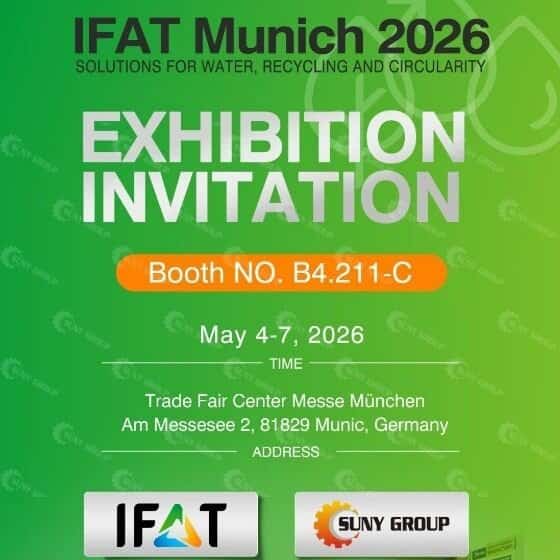
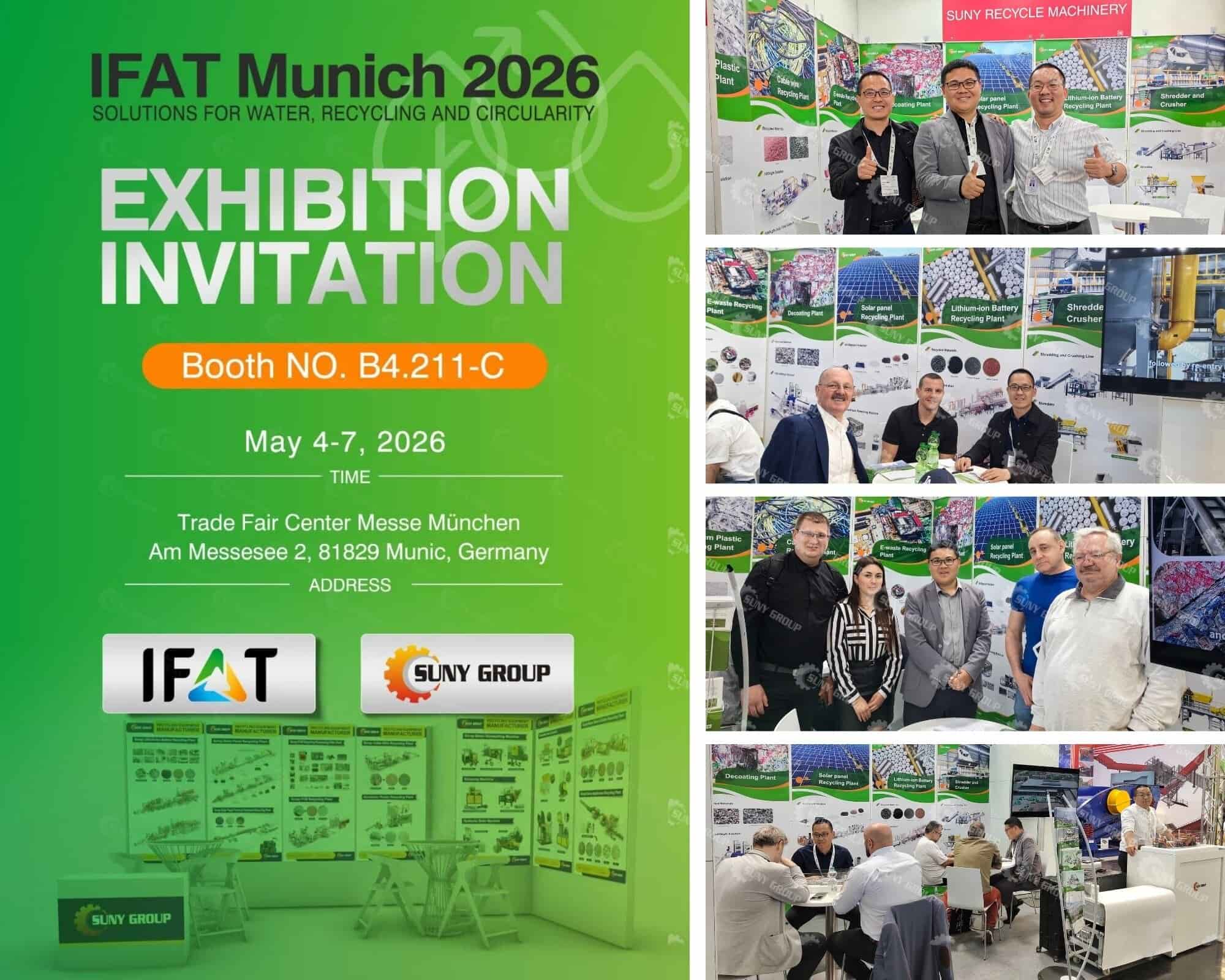
At most recycling plants, cables are where efficiency breaks down. Mixed materials. Oil contamination. Thick insulation. Low recovery rates. At IFAT Munich 2026, SUNY GROUP is reframing that challenge—not as waste, but as a high-value recovery opportunity. From May 4–7 at Messe München (Booth B4.211-C), the company will present a focused portfolio of copper cable recycling solutions designed to match how recyclers actually operate: varied input, fluctuating volumes, and increasing pressure on purity and output consistency.
SUNY GROUP Brings Precision Cable Recycling to IFAT Munich 2026

Two Paths, One Goal: Maximum Copper Recovery
Rather than pushing a one-size-fits-all system, SUNY GROUP builds its lineup around two fundamentally different recovery strategies.

For thick, high-value cables, the answer is control.
SUNY’s cable stripping machines handle diameters from 1 mm up to 200 mm, allowing operators to recover intact copper with minimal processing loss. No shredding, no over-processing—just clean separation where material value matters most.

For mixed and low-grade scrap, scale becomes critical.
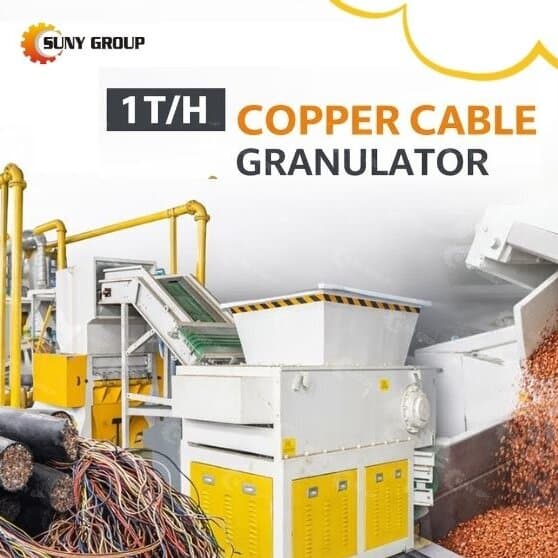
That’s where SUNY’s copper wire recycling systems come in. These fully automated lines combine crushing, granulation, and air separation into a dry, continuous process—delivering high-purity copper granules alongside reusable plastic. With capacities from 50 kg/h to 1000 kg/h, they’re built for industrial throughput without adding water treatment or secondary pollution challenges.

Where Standard Machines Fail, Specialized Systems Step In
Cable recycling rarely remains standard for long—materials like oil-filled cables, ACSR conductors, and multi-layer composite wires often slow down conventional systems or even bring them to a halt. To address these challenges, SUNY GROUP has developed dedicated solutions specifically engineered for complex separation tasks, including systems for jelly-filled cables and aluminum-steel reinforced conductors, enabling cleaner material separation, reducing processing bottlenecks, and ultimately improving recovery rates across difficult waste streams.


Exhibition Name

Date

City

Booth No.
IFAT Munich 2026 May 4–7, 2026 Munich, Germany B4.211-C

Whether you’re scaling up capacity, tackling new material streams, or replacing inefficient legacy equipment, SUNY GROUP invites you to Booth B4.211-C to explore practical solutions tailored to your operation.

🌍 Join us at IFAT Munich 2026!
📅 May 4–7, 2026
📍 Messe München, Germany
📌 Booth: B4.211-C

Contact Tel: +86 199 0388 6476
Contact Email: zyunfei87@gmail.com
Categories
Latest Cable Recycling Machine and Industry News

A Beginner Guide to Starting a Scrap Cable Recycling Business

With the global demand for recycled copper and aluminum continuing to rise, scrap cable recycling has become an attractive opportunity for entrepreneurs and recycling companies. Discarded electrical wires contain valuable metals that can be recovered and resold, creating both environmental and economic benefits. For newcomers entering the industry, understanding the basic steps—from sourcing raw materials to selecting equipment and building sales channels—is essential to establishing a profitable recycling operation.

The first step in building a cable recycling business is securing a stable supply of scrap cables. Common sources include construction sites, electrical contractors, telecommunications companies, demolition projects, and scrap yards. Establishing long-term partnerships with these suppliers ensures a steady flow of materials, which directly affects production capacity and profitability. Different types of cables, such as household wires, automotive wiring harnesses, and industrial power cables, contain varying amounts of copper or aluminum, so understanding the material composition helps estimate potential recovery value.

Scrap Cable Recycling Business Equipment

Choosing the right processing equipment is the next important stage. Beginners handling small volumes often start with wire stripping machines or small cable granulators (50-100 kg/hr), which allow copper to be separated from insulation at a relatively low investment cost. As production grows, many recyclers upgrade to automated cable recycling systems that integrate shredding, crushing, air separation, and dust collection. These systems significantly improve processing capacity and produce high-purity copper granules and clean plastic fractions.

After processing, the main source of revenue comes from selling the recovered metals. High-purity copper granules are especially valuable and are widely purchased by copper smelters, metal traders, and secondary metal manufacturers. Establishing stable sales channels helps ensure consistent cash flow and competitive pricing. In addition, separated plastic insulation can also be sold to plastic recycling companies, providing an additional income stream.

Successful cable recycling businesses often begin on a small scale and expand gradually. By starting with basic tools, operators can better understand material flow, recovery rates, and market demand. As supply networks and experience grow, investing in larger automated recycling lines can significantly increase efficiency and profitability. With proper planning and reliable supply chains, scrap cable recycling can develop into a sustainable and scalable business in the global recycling industry.

Contact Tel: +86 199 0388 6476
Contact Email: zyunfei87@gmail.com
Categories
Latest Cable Recycling Machine and Industry News

SUNY GROUP Chinese New Year Holiday Schedule Notice

Our Chinese New Year holiday will take place from February 13th to February 23rd, 2026. During this period, factory production and shipment activities will be temporarily suspended. Normal manufacturing operations will resume on February 24th, 2026.

Although our production floor will be at rest, our commitment to sustainability continues. Throughout the holiday, our team remains available for technical consultation, process discussions, and preliminary system planning, ensuring that project ideas and collaboration continue to take shape. Detailed engineering design, manufacturing, and delivery arrangements will be carried out immediately upon the resumption of factory operations.

SUNY GROUP Chinese New Year Holiday Schedule Notice

To support customers planning recycling projects for the year ahead — including Tetra Pak / Milk Carton recycling systems, cable recycling systems, aluminum-plastic separation lines, baby diaper recycling machine, and composite packaging recycling solutions — we encourage early order confirmation. Orders finalized prior to the holiday will be given priority in post-holiday production scheduling, helping projects move forward without delay.

SUNY GROUP remains committed to providing reliable recycling technologies and professional support to customers worldwide. We sincerely appreciate your continued trust and cooperation and look forward to advancing sustainable recycling solutions together in the coming year. We wish all our partners a prosperous, successful, and healthy Chinese New Year.

We are a professional manufacturer of recycling machinery and equipment. Our professional technology and considerate service will provide you with the most reasonable personal solution. For more machine information, or to schedule a factory visit (in-person or virtual), feel free to contact our sales team.

Contact Tel: +86 199 0388 6476
Contact Email: zyunfei87@gmail.com

Categories
Latest Cable Recycling Machine and Industry News

How to Get Clean Copper Granules from Scrap Cables

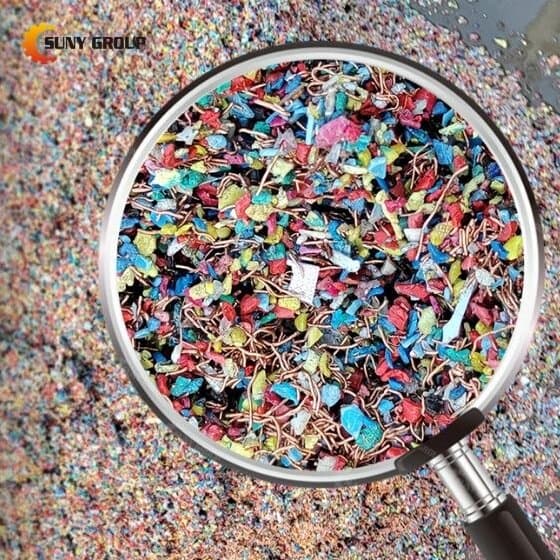
Recovering clean copper granules from scrap cables is often described as a technical challenge, but in reality, the difficulty lies less in the material itself and more in how the process is designed and controlled. For recyclers handling large volumes of waste copper wire, manual stripping is slow, labor-intensive, and increasingly uneconomical. Mechanical granulation combined with physical separation has therefore become the mainstream solution, especially when dealing with mixed, fine, or irregular cables.

Scrap cables vary widely in structure and composition, including automotive wiring harnesses, household appliance wires, communication cables, and computer wires. These materials cannot be processed efficiently using a single, simplistic method. What ultimately determines the economic outcome is not the quantity of scrap fed into the system, but whether the operation can consistently produce copper granules that meet market purity requirements. Clean copper sells faster, commands higher prices, and requires no additional downstream processing.

Get Clean Copper Granules from Scrap Cables
Cable Wire Granulator

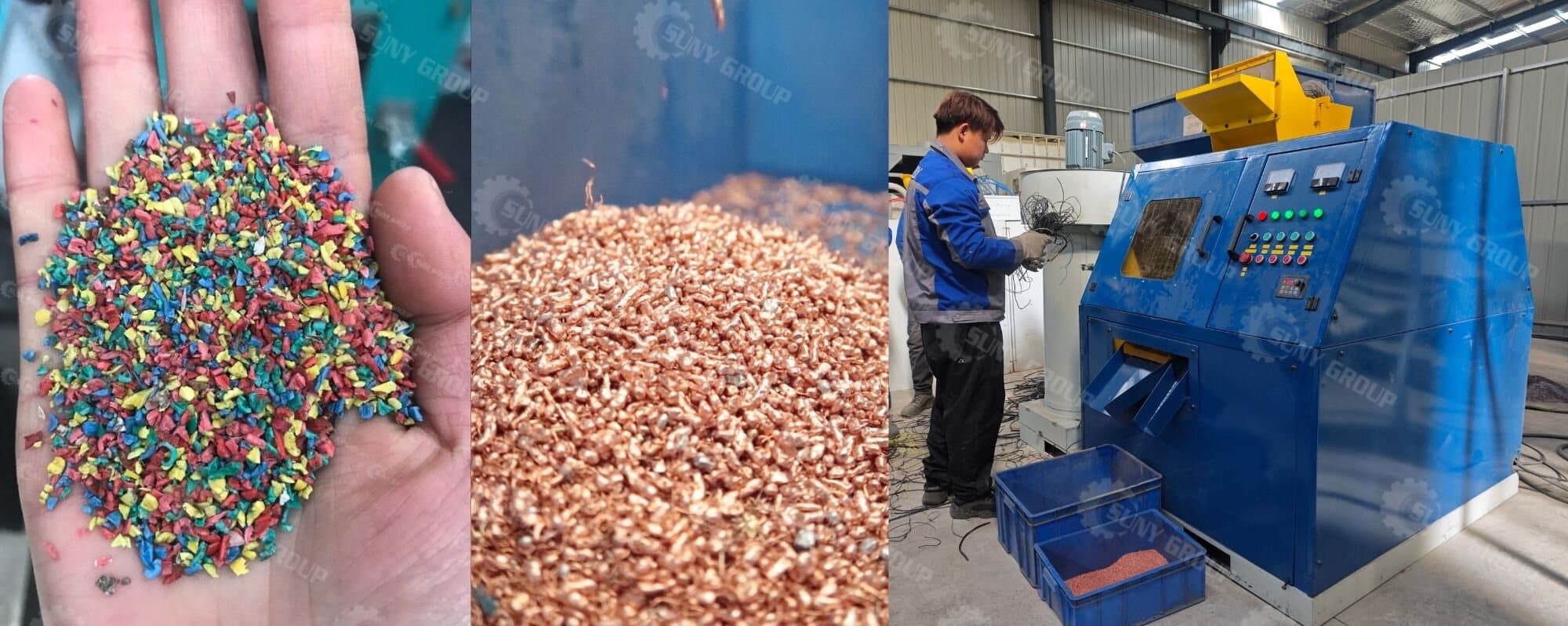
In mature recycling markets, physical separation has largely replaced burning and chemical treatment. Unlike traditional methods, physical processes do not generate wastewater, toxic emissions, or secondary pollution. They rely on controlled crushing, airflow, screening, and density differences to separate copper from insulation materials. This makes the process more stable, more compliant with environmental regulations, and easier to scale for long-term operation.

The quality of the final copper output depends heavily on process details. Crushing must be carefully controlled: particles that are too large prevent full liberation of copper, while excessive grinding increases dust and metal loss. Separation efficiency also improves significantly when multiple stages are used rather than a single pass. Stable airflow is particularly important, as even small fluctuations can result in plastic contamination or copper loss. These details, often overlooked, are what distinguish clean, market-ready copper granules from low-grade mixed material.

Waste cables are frequently described as “high-value scrap,” but value is only realized when recyclers can convert them into consistently clean, high-purity copper granules. The difference between copper that merely looks valuable and copper that is truly profitable lies in understanding cable structures, choosing the right physical separation route, and optimizing each step of the process. When these elements are aligned, cable recycling becomes not just technically feasible, but commercially reliable.

Contact Tel: +86 199 0388 6476
Contact Email: zyunfei87@gmail.com

Categories
Latest Cable Recycling Machine and Industry News

1000 kg/hr Copper Cable Granulator Process Flow Description

The Copper Cable Granulator Line features a linear, modular layout and operates with fully dry mechanical technology to ensure stable performance and easy maintenance. Scrap cables are fed by conveyor into a single-shaft shredder for pre-shredding, then pass through a magnetic separator to remove ferrous impurities. The material is subsequently granulated to fully separate copper from insulation and conveyed by air systems to the separation section. Multi-stage air separators and vibrating screens efficiently separate light plastics from heavy copper granules, while optional electrostatic separators further increase copper purity when required. Pulse-jet dust collection systems control dust throughout the process. The line outputs clean copper granules and plastic fractions ready for sale, and the configuration can be flexibly adjusted to suit different materials, site conditions, and capacity requirements.

1000 kg/hr Copper Cable Granulator Process Flow Description (Engineering Specification – Equipment No. a–k)

a) Feeding Conveyor
The feeding conveyor is designed to provide continuous and controlled feeding of scrap copper cables into the recycling line, ensuring stable material input for downstream processing.

b) Single-Shaft Shredder
The single-shaft shredder is used to pre-shred scrap cables into uniformly sized pieces. This stage reduces material size and facilitates consistent granulation performance.

c) Belt Magnetic Separator
The belt magnetic separator is installed to remove ferrous materials from the shredded cables, preventing damage to downstream equipment and improving overall system reliability.

d) Discharge Conveyor
The discharge conveyor transfers material from the magnetic separation stage to the fine granulation stage, maintaining a steady and uninterrupted material flow.

e) Knife-Type Granulator
The knife-type granulator is designed to finely granulate the pre-shredded cables, ensuring complete liberation of copper conductors from plastic insulation.

f) Air Conveying System (×2)
The air conveying units are used to transport granulated material to the separation section in a closed system, reducing dust emission and ensuring continuous operation.

g) Air Separator (×2)
The air separators utilize controlled airflow and density differences to separate light plastic fractions from heavy copper granules, achieving primary copper–plastic separation.

h) Linear Vibrating Screen – Copper Fraction (×2)
The linear vibrating screens classify copper-rich material by particle size, directing qualified copper granules to subsequent purification stages or final discharge.

i) Linear Vibrating Screen – Plastic Fraction (×2)
The linear vibrating screens are used to screen and discharge plastic fractions separately, ensuring clean plastic output suitable for secondary recycling.

j) Single-Roller Electrostatic Separator (×2)
The single-roller electrostatic separators are applied to remove residual fine plastic particles from the copper fraction, increasing copper purity to meet high-quality output requirements.

k) Pulse-Jet Dust Collection System (×2)
Pulse-jet dust collection systems are installed at key process points to capture airborne dust generated during shredding, granulation, and separation, ensuring compliance with environmental and occupational safety standards.

Contact Tel: +86 199 0388 6476
Contact Email: zyunfei87@gmail.com
Categories
Latest Cable Recycling Machine and Industry News

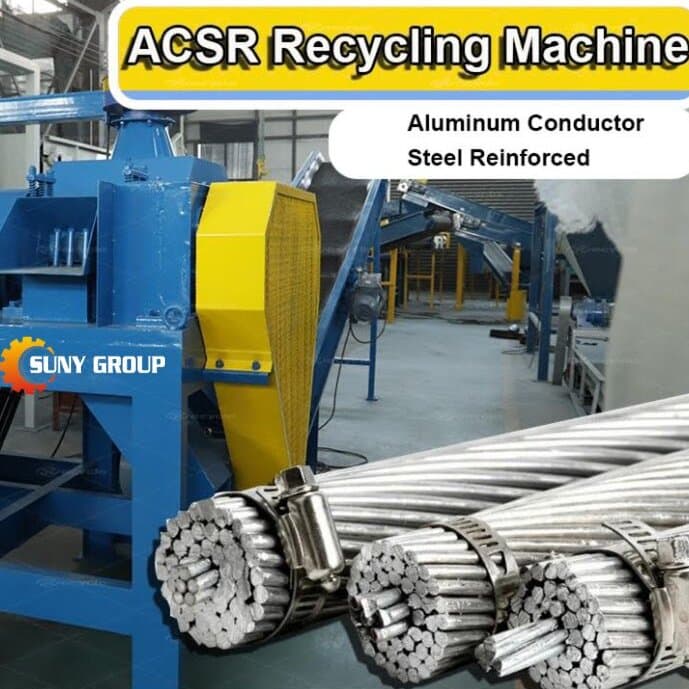
Integrated ACSR Dismantling & Recycling Equipment

Recycling ACSR (Aluminum Conductor Steel Reinforced) cables requires a dedicated process. Due to the high-strength steel core, standard copper or aluminum granulation machines suffer severe wear and unstable operation, making them unsuitable for ACSR processing. Manual dismantling is slow, labor-intensive, and inefficient, which is why industrial-scale ACSR recycling demands specialized equipment.

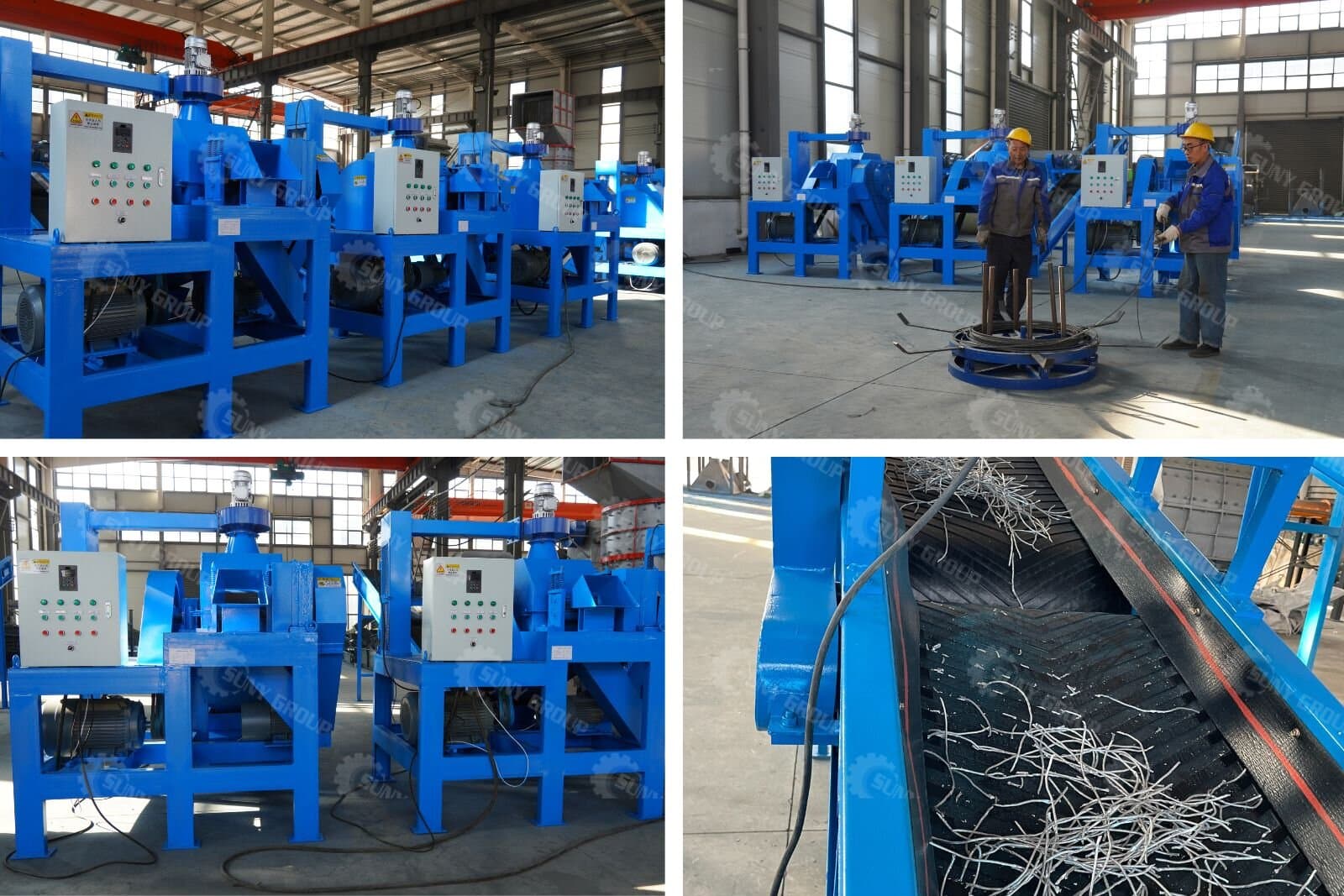
This integrated ACSR cutting and separation system is designed specifically for high-volume, continuous recycling. The production line processes complete cables in a single automated flow, combining cutting, crushing, and metal separation. Operating at speeds of up to 50 meters per minute, the system achieves a 99% separation rate, ensuring both high productivity and consistent output quality.

Integrated ACSR Dismantling & Recycling Equipment

The equipment is suitable for a wide range of aluminum stranded conductors, including single-core and multi-strand steel-reinforced ACSR cables. Incoming material is first reduced to pieces of 1–5 cm in size, then conveyed through a magnetic separation stage. By utilizing the magnetic properties of steel and the non-magnetic nature of aluminum, steel wires are accurately extracted by magnetic rollers or belts, while aluminum remains separate. The final output consists of clean, well-separated aluminum and steel wires, ready for downstream reuse or resale.

Designed for stable operation and ease of use, the machine features a 200 mm feeding inlet with automatically adjustable feed rollers that accommodate different cable sizes, ensuring smooth material flow. A three-speed control system enables output sizing of 10 mm, 20 mm, and 50 mm, catering to diverse recycling requirements. Multiple cables can be fed simultaneously, significantly improving throughput and operational efficiency.

Environmental protection and operational safety are integral to the system design. A built-in dust collection bag minimizes dust emissions and supports clean, pollution-free operation. With its compact structure, small footprint, and reliable performance, the equipment is well-suited for long-term industrial use. Key technical specifications include an overall dimension of 2000 × 1800 × 2450 mm, installed power of 22 kW, machine weight of 2000 kg, and a processing capacity of 50 m/min.

As a professional manufacturer of recycling machinery, we offer robust equipment as well as customized recycling solutions tailored to specific operational needs. Our skilled engineering team and comprehensive service support enable customers to achieve efficient, safe, and sustainable ACSR recycling. Contact our sales team today for detailed information, personalized consultations, or to schedule your factory visit—either in person or virtually. Take the next step toward efficient and sustainable ACSR recycling.

Contact Tel: +86 199 0388 6476
Contact Email: zyunfei87@gmail.com
Categories
Latest Cable Recycling Machine and Industry News

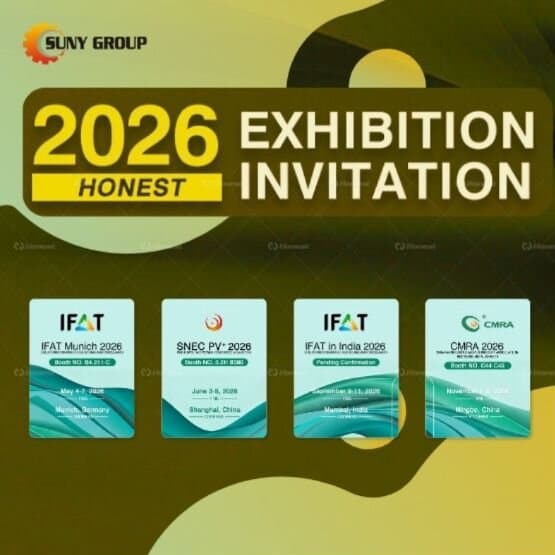
SUNY GROUP 2026 Global Exhibitions Participation Schedule Preview

In 2026, SUNY GROUP will continue to strengthen its engagement with global recycling and renewable energy markets through active participation in major international exhibitions across Europe and Asia. These events provide an important platform for direct communication with recyclers, project owners, and industry partners, allowing SUNY GROUP to better understand regional market needs and support practical project implementation.

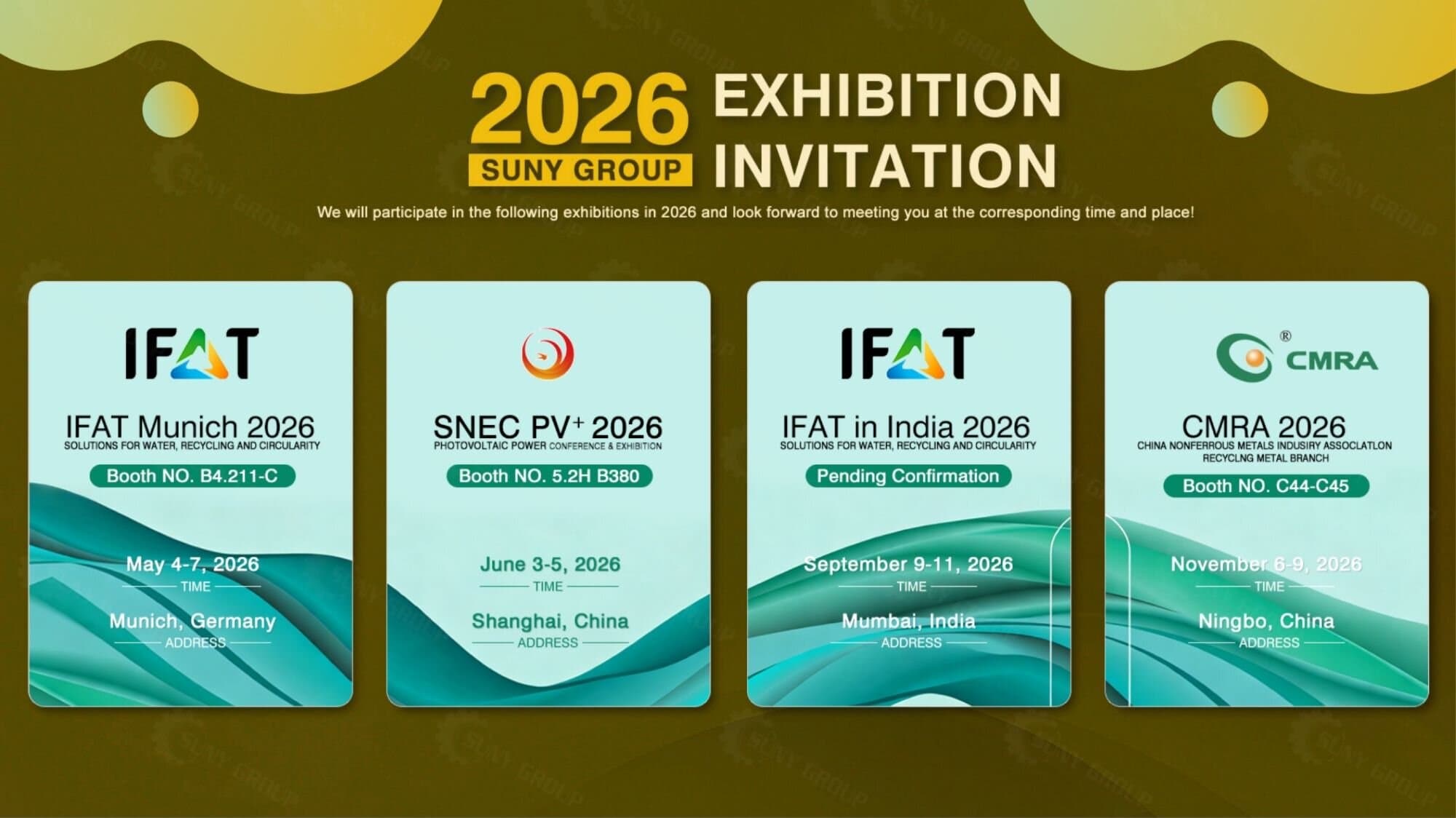
SUNY GROUP 2026 Global Exhibitions Participation Schedule Preview

With long-term experience in copper wire and cable recycling equipment manufacturing, SUNY GROUP has established a comprehensive product portfolio covering small copper wire recycling machines, medium and large fully automatic cable recycling production lines, cable stripping machines, jelly-filled cable recycling systems, and dedicated solutions for ACSR (Aluminum Conductor Steel Reinforced) cables. The equipment is designed to process a wide range of scrap materials, including industrial cables, communication wires, and complex mixed cables, while maintaining high recovery efficiency and stable metal separation purity.

SUNY GROUP firmly believes that effective recycling solutions begin with clear, face-to-face communication. Through international exhibitions, the team can quickly gain insight into customers’ raw material characteristics, capacity targets, and local operating conditions. Based on this understanding, SUNY GROUP focuses on recommending project-oriented equipment configurations and process solutions rather than standardized models, helping customers achieve more reliable long-term operation.


Exhibition Name

Date

City

Booth No.
IFAT Munich 2026 May 4–7, 2026 Munich, Germany B4.211-C
SNEC PV+ 2026 June 3–5, 2026 Shanghai, China 5.2H B380
IFAT India 2026 September 9–11, 2026 Mumbai, India Pending Confirmation
CMRA 2026 November 6–9, 2026 Ningbo, China C44–C45

Through continued participation in these exhibitions, SUNY GROUP aims to enhance technical exchange, explore new cooperation opportunities, and provide customers with recycling equipment solutions that are stable, efficient, and adapted to real-world operating requirements.

SUNY GROUP warmly welcomes global partners to visit our booths in 2026. We look forward to discussing your recycling projects, exploring customized solutions, and building long-term, mutually beneficial partnerships.

Contact Tel: +86 199 0388 6476
Contact Email: zyunfei87@gmail.com
Categories
Latest Cable Recycling Machine and Industry News

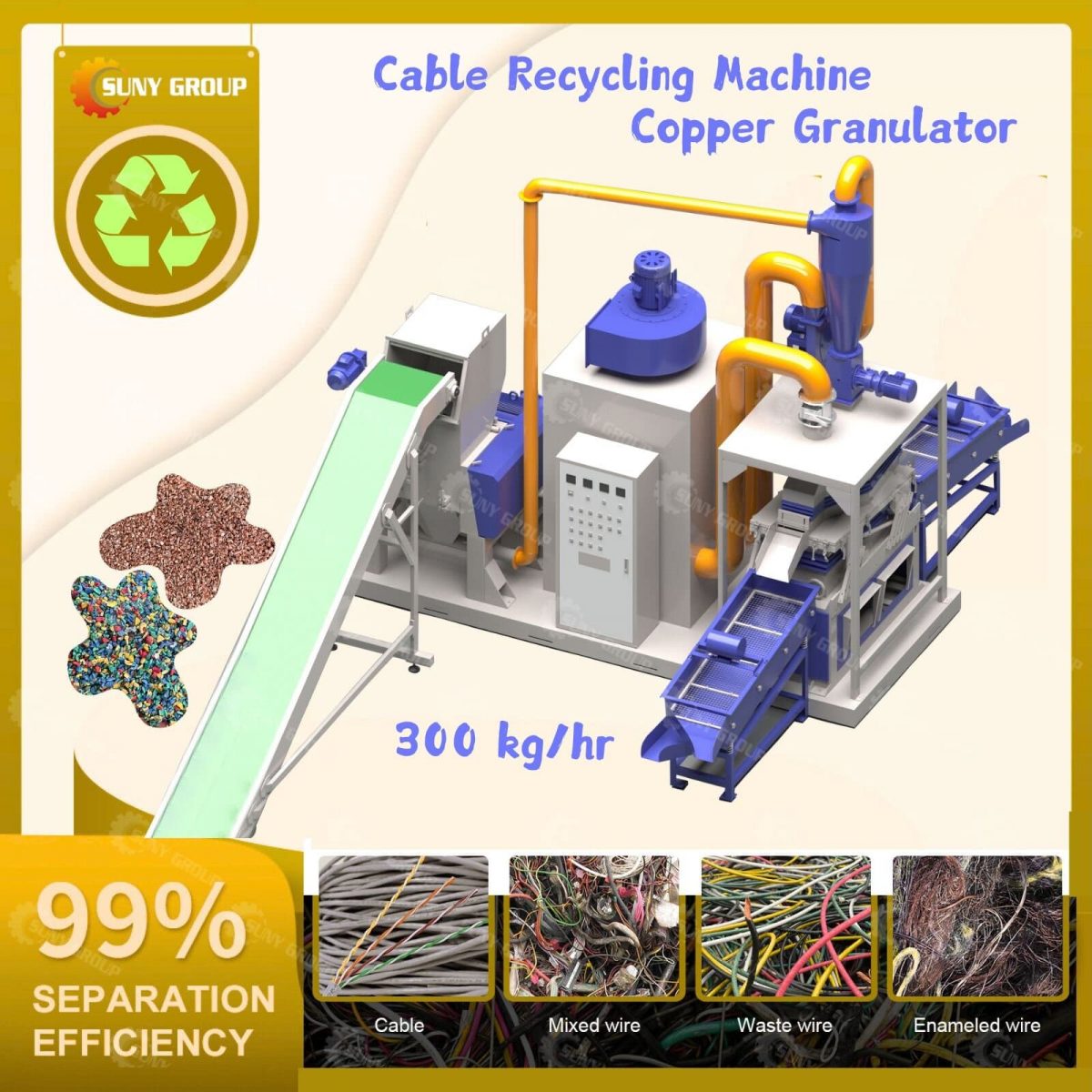
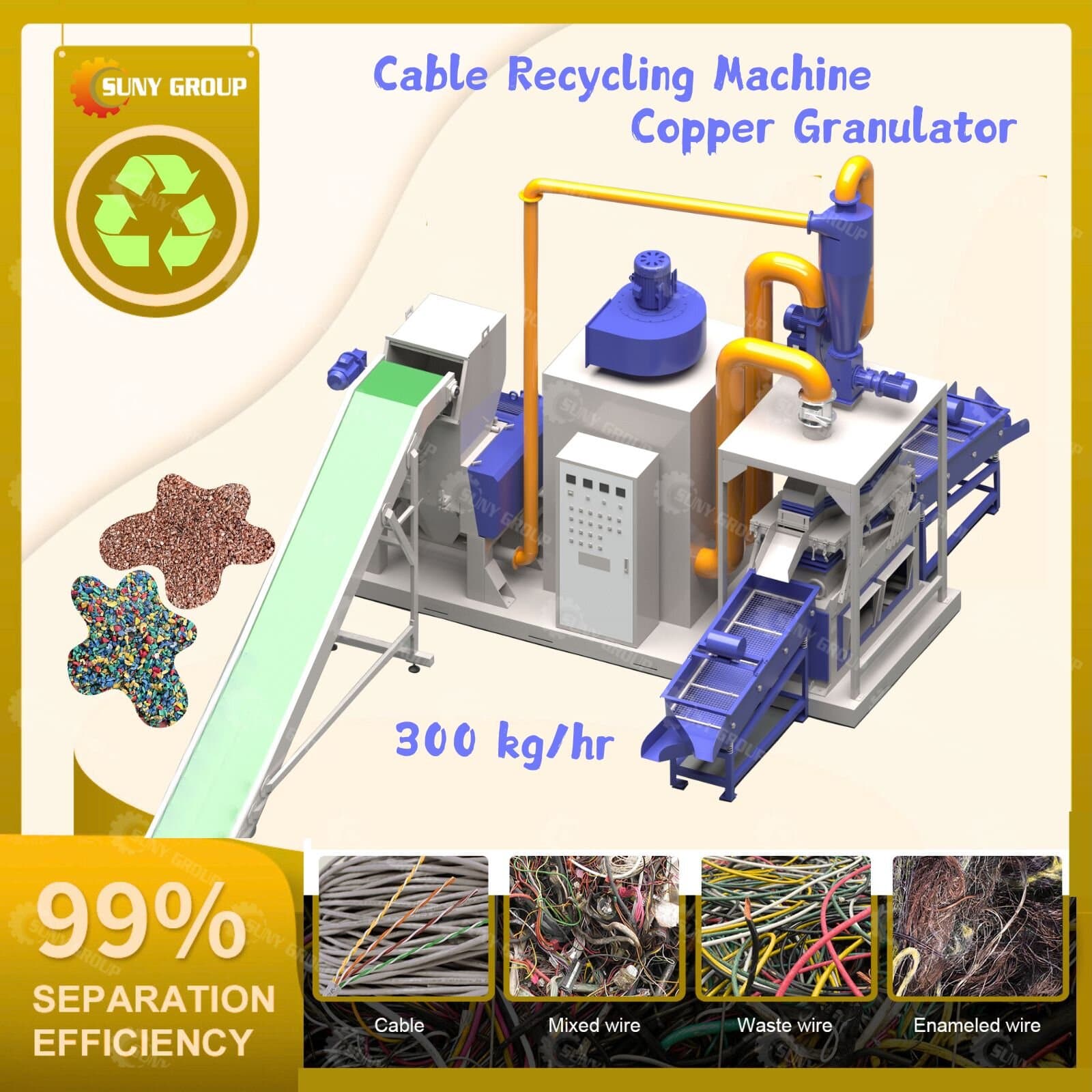
Cable Recycling Machine Copper Granulator for Mixed Scrap Wires

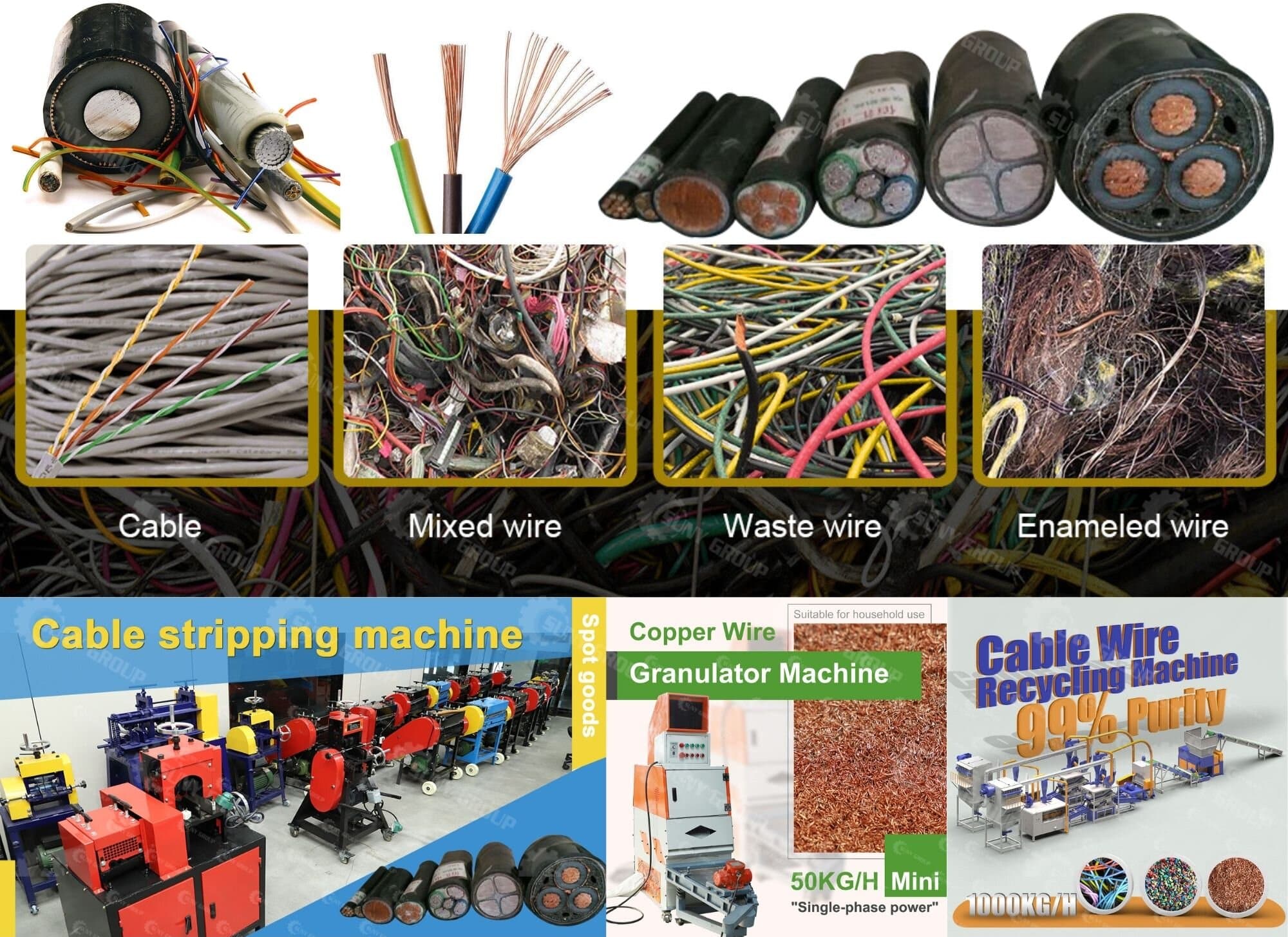
For newcomers to the cable recycling business, choosing the right equipment is the most critical decision you will make at the beginning of your project. In real operations, scrap input is rarely uniform. Most recyclers handle a wide mix of materials, including cables, mixed wires, waste wires, and enamelled wires. A machine that cannot adapt to this variability quickly becomes a bottleneck rather than a solution.

Cable Recycling Machine Copper Granulator

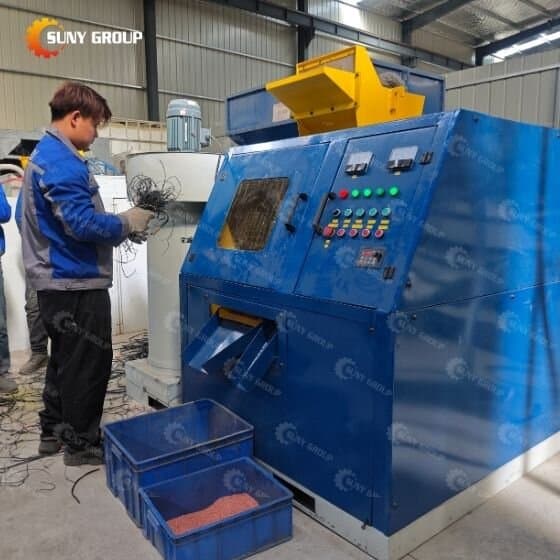
Our copper granulator is specifically designed to process mixed and irregular scrap wire efficiently and reliably. Using a fully dry separation process based on air flow and vibration, the system separates copper from plastic without water consumption or secondary pollution. The entire line is controlled by a PLC system, ensuring stable operation, consistent separation results, and easy daily management.

The standard recycling line consists of a knife crusher, an air conveying system, an airflow separator, a linear copper discharge screen, a linear plastic discharge screen, and a pulse dust collection system. Each module works together to achieve clean copper recovery while maintaining a compact layout and low operating noise. The configuration can be adjusted to match site conditions and production requirements, making the system suitable for different workshop layouts and expansion plans.

Copper remains one of the highest-value materials in the scrap metal recycling industry, but it must be properly processed before resale or remelting. This dry-type cable recycling machine handles wire diameters from 0 to 20 mm and delivers a separation efficiency of up to 99%. With processing capacities ranging from 300 to 500 kg per hour, it is widely used for automotive wiring harnesses, household appliance cables, communication wires, computer cables, and other scrap wires that are not suitable for stripping machines. By converting mixed cable waste into clean copper granules, the system helps recyclers maximise material value and build a stable, profitable recycling operation.

Contact Tel: +86 199 0388 6476
Contact Email: zyunfei87@gmail.com